Share via:
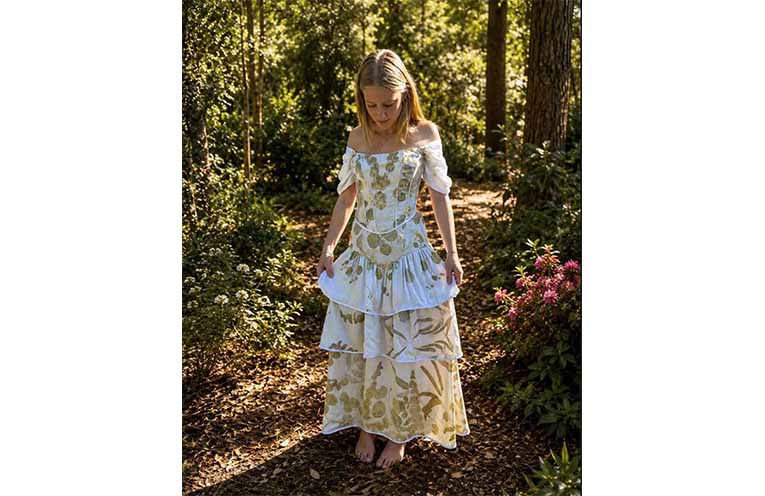
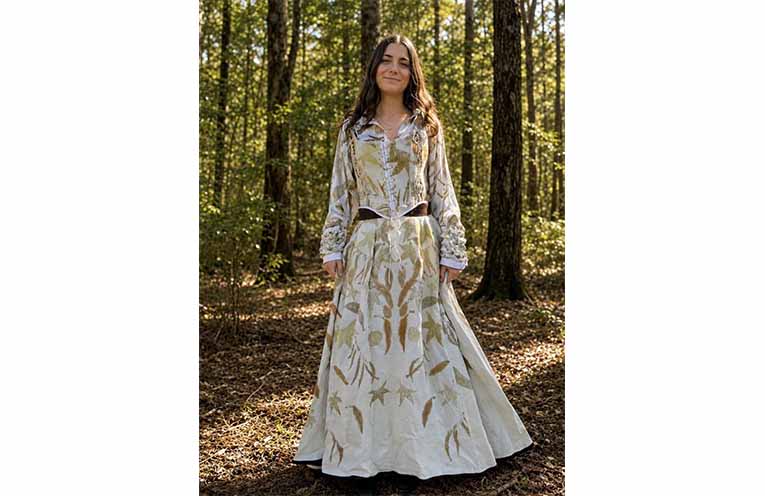
BISHOP Druitt College HSC Textiles students Amelie Carpenter and Hannah Gallagher have become the first students in the school’s history selected to showcase their work at Eco Fashion Week Australia (EFWA).
The two Year 12 students will travel to Perth in October to present a combined capsule collection on the runway for the event’s Handmade for the Earth program at the Midland Junction Arts Centre.
In an industry where designers typically pay to participate, both students were directly sponsored by the event’s Creative Director to showcase their HSC Major Works.
The national recognition comes after months of work hand-crafting, designing, and botanically dyeing their own raw silks, wools, and linens using natural plant materials.
The recognition has fuelled their passion for fashion by making their work feel real, Amelie told News Of The Area.
“This was a year’s worth of work … now being shown at a national event alongside established designers.
“It’s given me so much more confidence that this is a world I can actually belong in, not just something I dream about from the classroom.”
Hannah told NOTA it had completely changed how she sees the fashion industry.
“Knowing that something we made from scratch is good enough to walk a national runway has pushed me to keep chasing bigger, more ambitious ideas,” Hannah said.
“It’s proof that all those late nights beading actually meant something.”
Amelie started creating her collection with a lot of draping on the mannequin and pattern-making before she touched the real fabric.
“I wanted the shape to move properly before I committed to anything.
“Then came the botanical printing, which meant collecting leaves, rolling, layering and steaming them onto the fabric, and waiting to see what colours came through.”
For Hannah it was less about draping and more about hand smoking and textural techniques.
“It was slow, meticulous work,” Hannah said.
“The botanical printing was extremely fun, yet also very time-consuming, but definitely worth every hour.”
Amelie worked entirely with natural fibres – silk and cotton – as these fibres take botanical dye better than synthetics, and they biodegrade properly at the end of their life.
“This mattered a lot to me given how wasteful the industry can be,” Hannah said.
Hannah chose similar natural bases for the same reason but also included upcycled wool and linen for more texture and weight.
Describing her creation Amelie said it was a whimsical corset and tiered skirt, inspired by the Pre-Raphaelite art movement.
“It’s less about fashion and more about telling a story about a romantic, ethereal character connected to nature.”
She hand-printed the silk herself, to give it soft floral and leaf motifs in earthy greens, some panels delicate and pale, others richer and deeper.
“So, it has real dimension,” she said.
“I layered that with pleats, draped silk sleeves, laser-cut flowers and hand beadwork, so it catches the light beautifully and still reads clearly in photographs.”
Hannah’s inspiration was Roald Dahl’s character Fantastic Mr Fox, she said.
“It’s built more like a theatre costume than an everyday fashion piece,” Hannah said.
“Everything had to read clearly under stage lights and communicate character instantly.
“The structured, boned corset nods to historical costume traditions, while the flowing skirt is the opposite, soft and full of movement.”
She used botanically dyed wool, silk and linen for a handcrafted, earthy feel, and mixed in different yarns and hand beading so the surface catches the light differently up close.
Looking ahead to their future careers, both Amelie and Hannah intend to take their eco-ethics and designs into working in the fashion and clothing industry.
“I’ve seen how much waste this industry creates, so however my career unfolds, whether that’s design, styling, or costume work, sustainable and natural materials will always be part of how I create,” Amelie said.
“Botanical printing and natural fibres aren’t just a technique I used once for school; they are the foundation I want to build my designs upon, wherever this industry takes me,” Hannah said.
BDC Textiles Teacher, Samantha Douglass, said having high school students selected for a professional, sustainable fashion week was an extraordinary achievement.
“To see HSC students operating at this level of artistic maturity and environmental responsibility is incredible,” she said.
“Amelie and Hannah didn’t just design garments; they built them from scratch using natural plant dyes to colour their own raw silks, wools, and linens.
“Their commitment to sustainable design fits the ethos of Eco Fashion Week Australia beautifully and having EFWA sponsor their runway debut in Perth is proof that regional student designers can step directly onto the national stage.”
Eco Fashion Week Australia will run from October 30 to November 1 at the Midland Junction Arts Centre in Perth.
By Andrea FERRARI
You can help your local paper.
Make a small once-off, or (if you can) a regular donation.
We are an independent family owned business and our newspapers are free to collect and our news stories are free online.
Help support us into the future.
Share via: