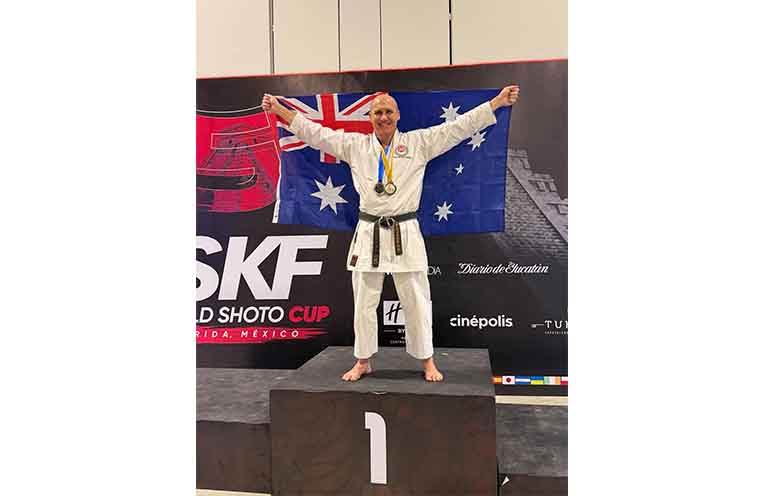
ANDREW Hall has taken on the world and come out on top in Mexico.
The Coffs Harbour Shotokan karate athlete and instructor won a gold and silver medal at the 5th ISKF World Shoto Cup in Mérida, Mexico.
He earned the title of world champion as part of the Australian team, also serving as his country’s Male Team Captain, where he played a key leadership role throughout the tournament while competing, coaching and supporting athletes on the world stage.
It also involved having the great honour of carrying the Australian flag during the official opening ceremony, a moment he described as one of the proudest of his more than 40 years in karate.
“Winning a gold medal was a proud moment, but serving as Team Captain and witnessing the dedication, resilience and success of our athletes was the greatest privilege,” he said.
He captained an Australian team that enjoyed an outstanding campaign, finishing with nine gold, six silver and four bronze medals.
Hall believes he will not be the last world champion produced by the Coffs Coast region.
“While it is a great honour to become the region’s newest world champion, I am confident I won’t be the last,” he said.
“We have exceptional young athletes and instructors coming through our dojo, and like-minded clubs in the region and the future of karate on the Coffs Coast region has never looked brighter.”
The new world champion acknowledged the support of his home dojo, TSKF Coffs Harbour, along with the athletes, coaches, officials, families and supporters who contributed to the team’s success.
He said TSKF Coffs Harbour is a not-for-profit traditional Shotokan karate club focused on personal development, character building, and the lifelong practice of karate.
“We are not a sports karate club, our primary focus is traditional Shotokan karate and helping our students become the best versions of themselves,” he said.
“However, for those who wish to challenge themselves, we also provide opportunities to compete against like-minded karate practitioners at state, national and international levels.”
By Aiden BURGESS