
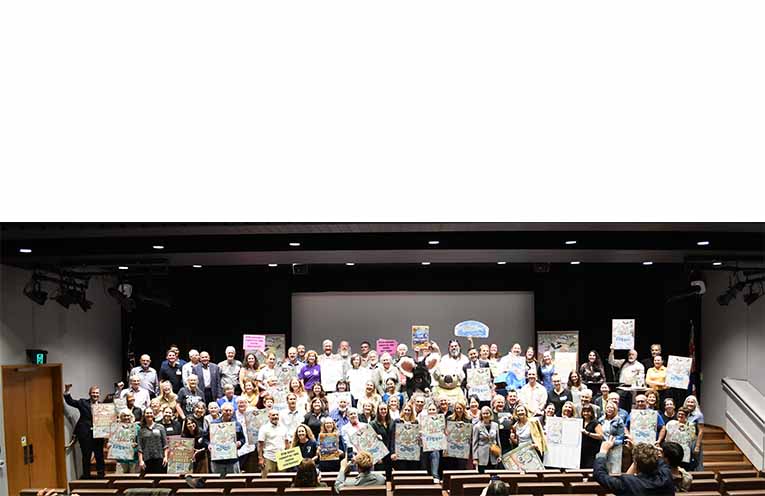
The NSW Minister for Climate Change, Energy, Heritage and the Environment, Penny Sharpe, has been presented with a letter from representatives of the 30×30 NSW Coalition and sporting celebrities which calls on NSW to commit to action towards the goals of protecting and restoring 30 per cent of land and sea by 2030.
More than 200 organisations across NSW have joined forces for one of the world’s most ambitious efforts to protect nature: the ‘30×30’ targets, which form part of the Kunming-Montreal Global Biodiversity Framework landmark agreement (2022) to halt and reverse biodiversity loss by 2030.

The Framework is supported by 196 countries, including Australia, and endorsed by all state governments.
Attendees gathered at the Theatrette at NSW Parliament House, on Tuesday, 17 November, to hear a range of speakers before meeting with Minister Sharpe.
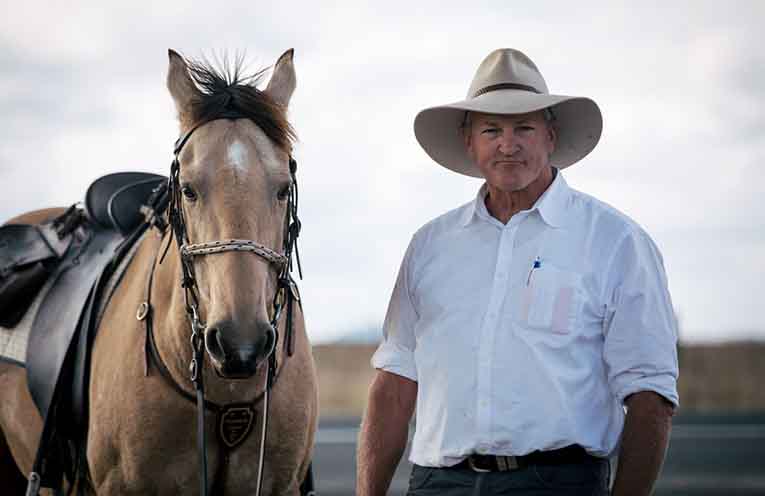
Keynote speakers at the event included pro surfer Tom Carroll, surfing celebrity Torren Martyn, Australian world record-breaking solo sailor Lisa Blair AOM, Inverell cattle farmer Glenn Morris, who rode his horse across the Harbour Bridge to advocate against climate change in 2016, and former NSW Environment Ministers Matt Kean (via video message) and Rob Stokes.
“Whether you surf, hike, fish or just love a walk on the beach, nature is part of who we are as Australians,” said Torren Martyn.
“As a surfer I’ve spent a lot of time in the ocean, here and abroad, and I’ve realised we cannot take for granted just how unique and special our wildlife and ecosystems are here.
“I believe we have a responsibility to protect and preserve nature for future generations and achieving 30×30 would be something that we can all be incredibly proud of.”
The coalition includes business people and farmers.
Owner of almost-100-year-old Aussie adventure store, Paddy Pallin, Rob Pallin said his clients were adventurers and holidaymakers who helped regional coastal economies to thrive.
“Let’s protect more places they love, the places we all love,” Mr Pallin said.
“The application of 30×30 on a state level is an insurance policy – not just for a flourishing natural world, but for a flourishing economy.”
Richard Nicholls, retired owner of Manly Dive Centre and member of the Dive Industry Association Australia, said the recent historic victory of the Great Koala National Park was a good start, but politicians shouldn’t stop there.
“NSW hasn’t seen a new marine reserve created in two decades,” Mr Nicholls said.
“This should be a priority to protect our precious environment.
“Polling and surveys consistently show that people love our land and sea parks, and they want more of them.
“Employment in tourism is almost four times greater than in forestry and mining in NSW.
“This is the story we need to tell.”
Local small business woman, Caitlin Hockey, said the 30×30 NSW celebration in parliament was an opportunity to celebrate the creation of the Great Koala National park.
“It is not just an opportunity for our koalas to thrive, but for our local small businesses, like my family business which is dependent on tourism,” Ms Hockey said.
“In my case, I am lucky to have travelled the world as an Australian and international tour guide, and now after returning home, I am super-excited about forging a new dream; a horse-riding tour business.
“Tourism in NSW employs almost quadruple that of forestry and mining, so truly caring and nurturing the growth of our protected area network is an opportunity to shift away from carbon-intensive industries and create a greater diversity of opportunities.
“It is up to us to dream big and let our leaders know what sort of future we want – one that protects our wildlife, local livelihoods, and community.”
The coalition is calling for a legislated NSW Nature Strategy that commits to protecting and restoring at least 30 per cent of every NSW land, marine and freshwater bioregion by 2030, guided by science and ecological connectivity, in line with Australia’s commitment to the Global Biodiversity Framework.
Members also want a strategy that embeds First Nations leadership and cultural knowledge in land and sea management and governance, expands protected areas and marine sanctuaries, ends native forest logging on public land, and prioritises under-protected ecosystems, reduces land clearing, supports private land conservation and strengthens protection for rivers, wetlands and catchments and establishes measurable targets, dedicated funding, clear timelines and public accountability.
“Our water cycle is broken and so is our climate, but science shows we can fix it by increasing protection and restoration efforts,” Inverell cattle farmer Glenn Morris said.
“Applying the 30 per cent protection and restoration targets wouldn’t just be a win for wildlife; it is a vital lifeline for resource managers, from fishers to farmers.
“By restoring vegetation and safeguarding biodiversity, we can actively rehydrate our landscapes, create cleaner healthier waterways, and secure a more resilient climate for our shared future.
“The sheer diversity of organisations and people coming together from all walks of life shows how much support there is for a big and bold commitment by NSW.”
By Andrew VIVIAN