THE NSW Food Authority says consumers can feel confident enjoying locally grown berries, with NSW Government laboratory testing confirming they meet food safety standards for pesticide residues.
Twenty-five kilograms of blueberries and raspberries, representing 100 samples of 250 grams each, were purchased from a range of Sydney retail stores in November 2025.
They were tested by an independent NATA-accredited laboratory for 218 pesticides, including the prohibited chemical thiometon, which was not detected.
Results were within the allowable limits of the Australia New Zealand Food Standards Code for other pesticide residues.
NSW Food Authority acting CEO Andrew Davies, said the limits were developed by government agencies using internationally recognised methods and national scientific data.
“Consumers can be reassured that all 100 samples analysed by the NSW Food Authority were compliant and the berries were safe to eat,” he said.
Cate Faehrmann MLC has been campaigning to better regulate the blueberry industry.
She said, “I welcome the public release of this report by the NSW Food Authority, but there’s a lot of room for improvement, especially as this is possibly the first report of its kind on Australian berries.
“It tells us which pesticides were tested for, but not which ones were detected, or at what concentrations.
“It doesn’t tell us where the berries were grown, whether they were organic, fresh or frozen.
“Given that one or more pesticides were detected on 95 percent of samples, the consumer should have the right to know what chemicals are in their fresh produce and in what quantity.
“An even better option would be to provide information at the point of sale on potential chemical additives in the produce we are consuming.”
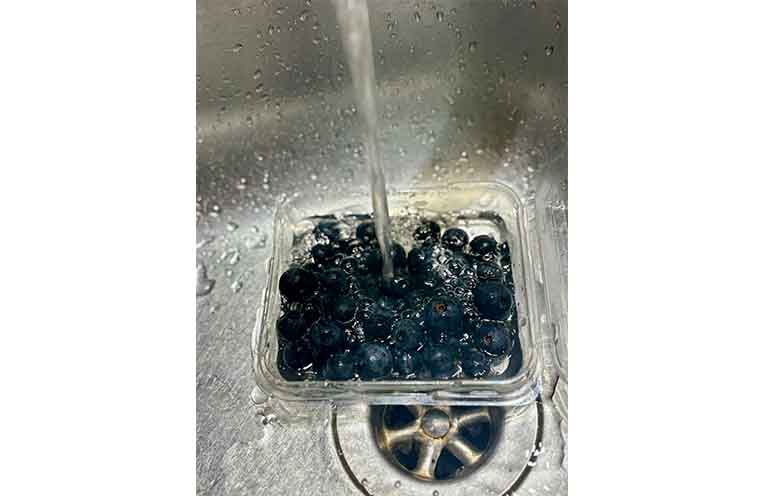
Mr Davies said while the tests showed produce met the requirements, washing fruit and vegetables under cool running water before eating was important.
“[This] removes visible and invisible contaminants, including surface herbicide and pesticide residues which could remain on the skin,” he said.
“Excess moisture can promote bacterial growth, so it’s important to wash produce just before eating or preparing food.”
The project complemented recent NSW Environment Protection Authority (EPA) inspections of northern NSW berry farms, which found farmers complied with chemical use regulations.
By Andrew VIVIAN