Share via:
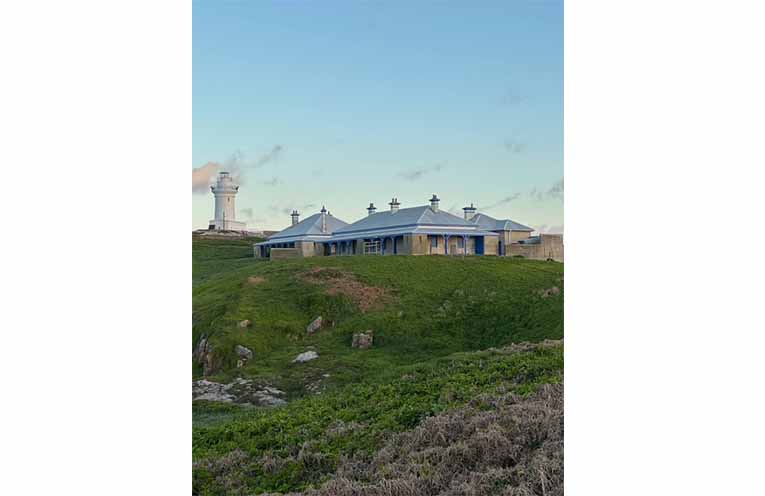
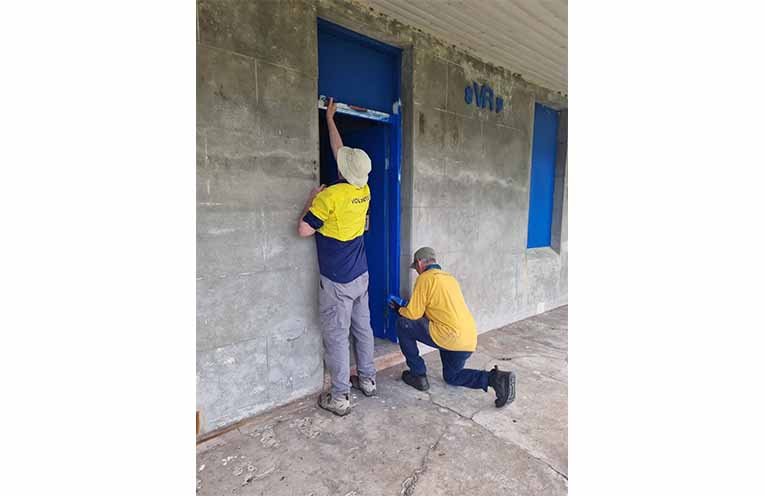
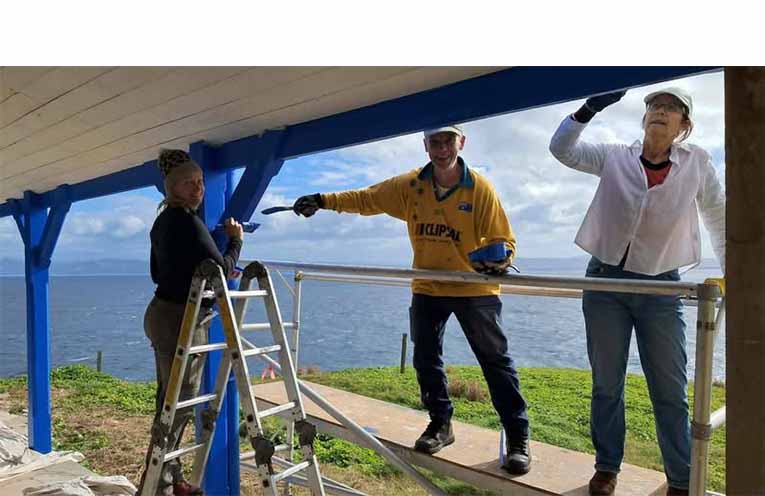
VOLUNTEERS from Friends of South Solitary Island Lighthouse (FOSSIL) recently joined NSW National Parks and Wildlife Service (NPWS) staff for working bees focused on much-needed maintenance of the Coffs Coast island’s historic buildings.
The three visits covered maintenance work that has been waiting six years, having been held up by COVID lockdowns and severe cyclonic weather disruptions.
In the first weeks of May, June and July, after the resident shearwaters had flown north, the FOSSIL volunteers moved in to help NPWS maintain the historic lighthouse and its lighthouse-keeper cottages and amenities.
“The maintenance work, replacing rotten and degraded fixtures and painting, was done to the awnings, beams and window frames on the old lighthouse keeper’s cottages,” FOSSIL president Grant Cairncross told News Of The Area.
“Painting to the general living quarters and nearby storage sheds was also completed by the three working bees.”
Members of FOSSIL making their first trip to the island enthusiastically dove into learning the island’s history.
Including the history and stories behind Lydia, the island’s ‘resident ghost’.
There was also much to learn about working in the off-shore environment.
“Much as it looks peaceful and remote, there’s the constant sound of the sea, the birds and the wind making it an ever-changing workplace,” Mr Cairncross said.
One of the volunteers on the final July trip was FOSSIL Vice President Penny Westman.
“The ongoing collaboration between FOSSIL and NPWS is something we’re incredibly proud to be part of, helping preserve the island’s rich heritage and history, and ensuring the buildings remain for generations to come,” Ms Westman said.
The lighthouse, and its numerous optic lenses, first shone brightly on 1 March 1880.
On 22 August 1975 the Lighthouse was automated and on 29 December 1975 all residents left. The buildings were left to the birds and nature, except during the annual volunteer maintenance trips by FOSSIL that have occurred over most of the past 20 years.
Solar powered since 1985, the automated light still shines every night.
The original optic, made by Chance Brothers, Southampton, England now has a new and permanent home at the Jetty Foreshores where it is managed by the City of Coffs Harbour.
It is lit several times a year to commemorate the first day the optic shone in 1880, and also each year on International Maritime Day, each September.
By Andrea FERRARI
You can help your local paper.
Make a small once-off, or (if you can) a regular donation.
We are an independent family owned business and our newspapers are free to collect and our news stories are free online.
Help support us into the future.
Share via: