Share via:
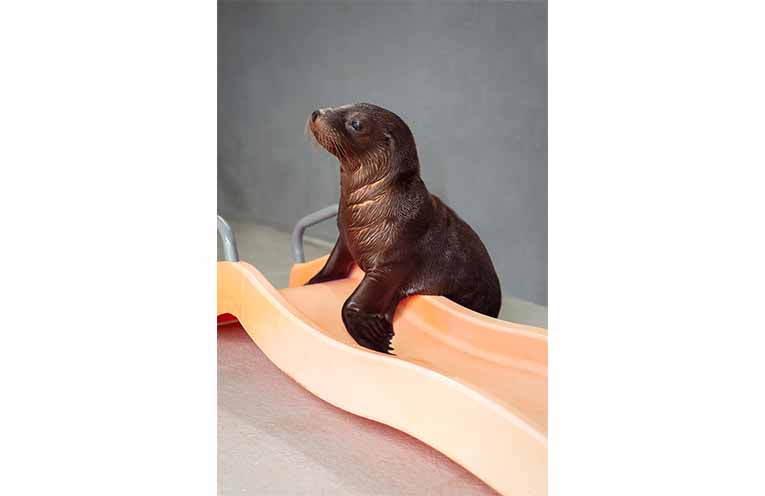
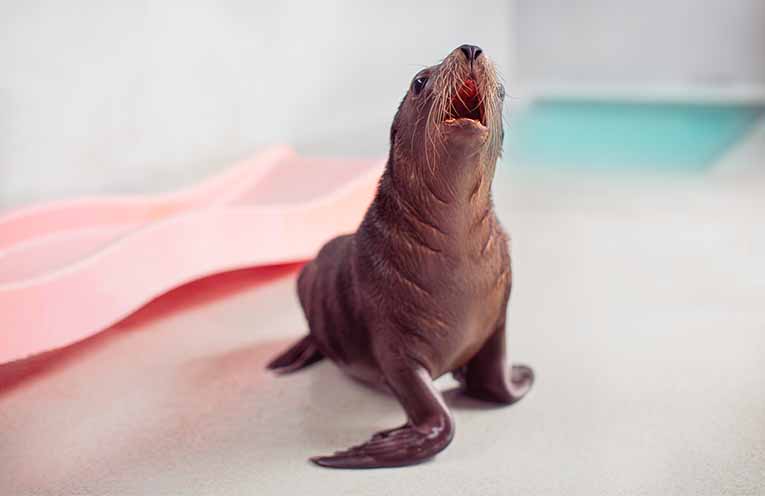
THE Australian sea lion (Neophoca cinerea) pup born on 23 September at Coffs Coast Wildlife Sanctuary (CCWS) is meeting all his developmental markers and making healthy progress.
“The pup is putting on weight well, gaining approximately 0.5kg per week,” CCWS Manager Tiga Cross told News Of The Area.
“He’s drinking lots of mum’s milk.
“He’s starting to paddle in deeper water and has made some attempts for longer swims in deeper water.”
At six weeks old that is pleasing progress, Ms Cross said.
Currently called “pup”, he will soon have a name, chosen by the followers of the CCWS’s social media and visitors.
“Naming suggestions have been flooding in, with nearly 100 names submitted, so far.
“These names will be narrowed down with the team and the top five will be posted on the CCWS website where people can vote for their favourite,” she said.
Pup’s mother Adelaide and father Ozzie have two sons, Hugo and Gary.
Adelaide’s story is one of rescue, survival and second chances.
Born in the wild around 2007, Adelaide was rescued as an orphaned pup from a beach in South Australia and was unable to survive independently in the wild.
Following her rescue, Adelaide received specialist care and was given a permanent home in human care.
Today, she is an important member of the CCWS family and plays a valuable role in conservation education and species management, Ms Cross said.
Adelaide welcomed her first pup, Hugo, on 28 September 2019, followed by Gary, also known as Garlambirla, on 2 February 2024.
“Her newest arrival marks another special chapter in her journey from a vulnerable orphaned pup to an experienced mother of three,” Ms Cross said.
“Adelaide’s story highlights the important role that specialist animal care, conservation education and coordinated species management programs can play in protecting endangered wildlife.”
Australian sea lions face significant threats in the wild, including fishing-related entanglement, marine pollution, disease and changes to their marine environment.
With the growing global threat of highly pathogenic avian influenza (H5 bird flu), the importance of specialist wildlife facilities such as Coffs Coast Wildlife Sanctuary has become even more apparent.
Although commonly associated with birds, avian influenza can also infect marine mammals, including seals and sea lions.
Overseas outbreaks have resulted in significant marine mammal deaths, raising serious concerns for vulnerable species with already declining populations.
The Sanctuary’s priority is ensuring Adelaide and her pup have the privacy, care and quiet environment they need during these important early stages of development.
The marine mammal team will continue closely monitoring Adelaide and her pup, with animal welfare remaining the highest priority.
“Being cautious of bird flu, Pup cannot be seen by our visitors yet,” Ms Cross said.
“Our Naming Competition winner will be able to go behind the scenes and see him.”
Australian sea lions are an endangered species found only in Australia, making every birth an important milestone for conservation, education and species management.
Unlike most seals and sea lions, which generally breed annually, Australian sea lions have one of the most unusual reproductive cycles of any marine mammal, with females typically producing just one pup approximately every 17–18 months.
With a gestation period of up to 14 months, followed by an extended period of maternal care, their slow reproductive rate makes recovering from population declines particularly challenging.
By Andrea FERRARI
You can help your local paper.
Make a small once-off, or (if you can) a regular donation.
We are an independent family owned business and our newspapers are free to collect and our news stories are free online.
Help support us into the future.
Share via: