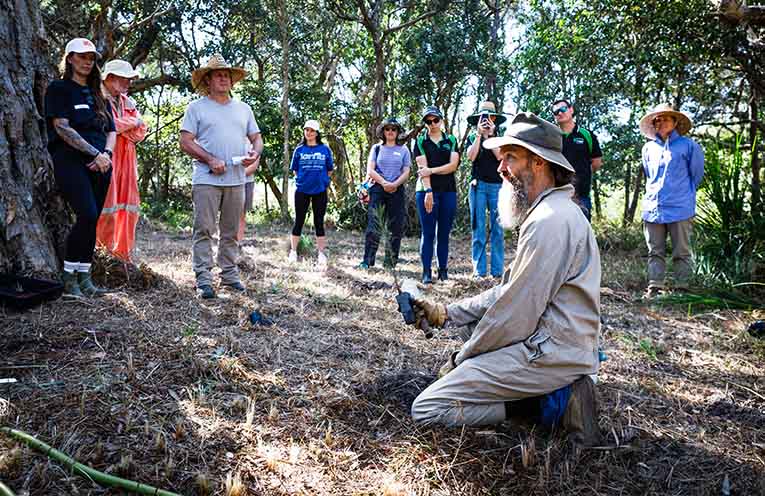
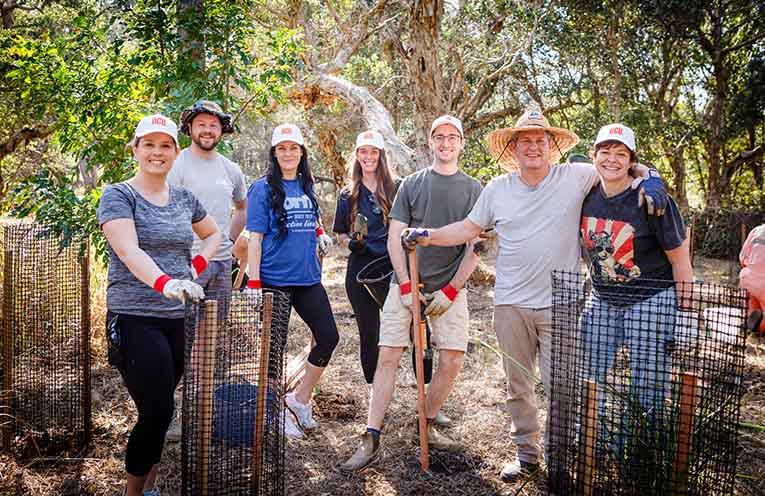
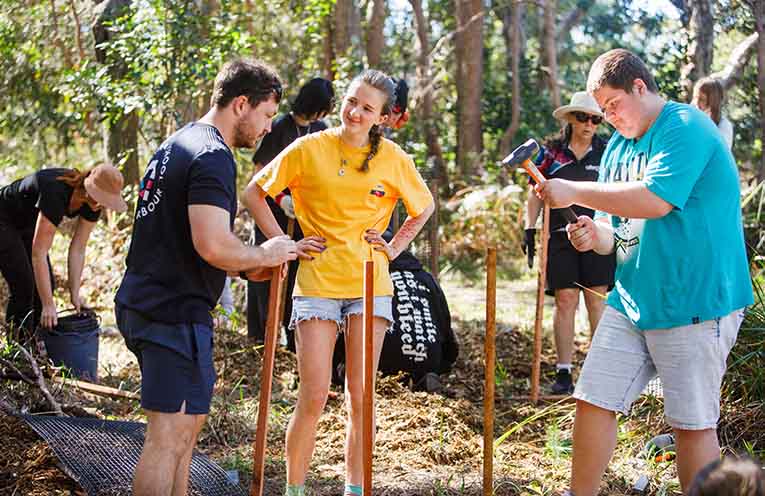
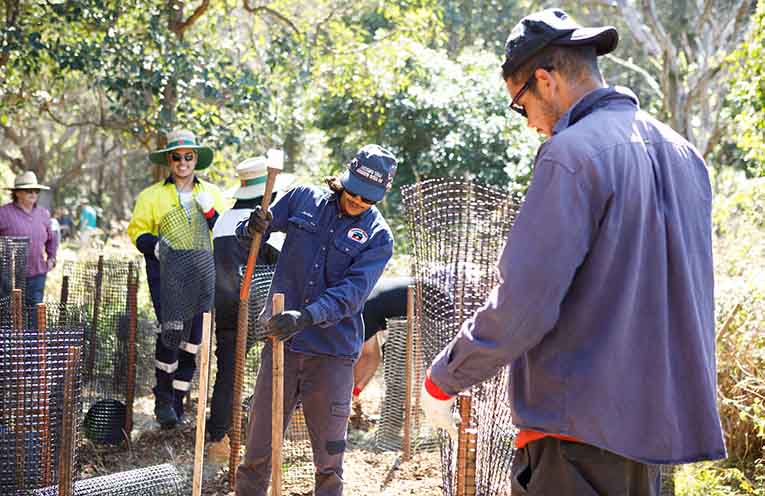
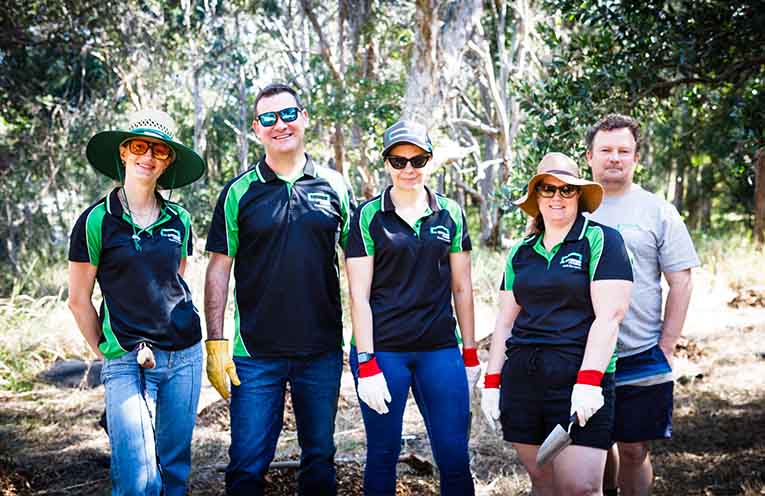
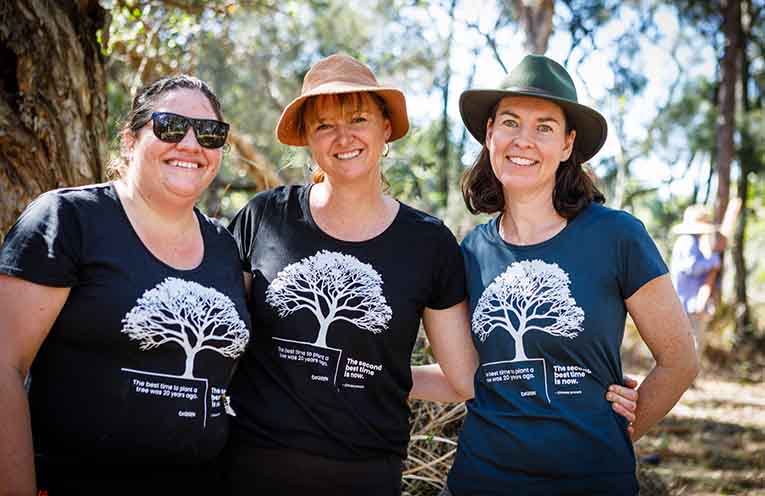
BOAMBEE Headland is a little greener after nearly 400 native trees went into the ground on Friday 4 September, as students, businesses and environmental volunteers came out to plant habitat for the Vulnerable South-eastern Glossy Black Cockatoo.
The planting, led by OzGREEN as part of its ‘Save the Glossy Black’ project, focused on native she-oaks — particularly Allocasuarina species, the primary food source for the birds, which feed almost entirely on seeds inside the cones and are known to visit the area.

Plants were fitted with tree guards, as the headland’s resident wallaby population poses a real risk to survival while trees are young.
Habitat plantings like this rely on playing the long game.
She-oaks take time to mature, something OzGREEN Co-CEO Kathleen Hannah says is a core concept underpinning the project.
“Every tree planted is an act of hope for the next generation of Glossy Black-Cockatoos,” she said.
“These trees need years to grow and mature.
“But one day, a Glossy might land in one of the trees we planted, crack open a cone and find the food it needs to survive.
“It was wonderful to see students, community members, local businesses and conservation organisations all working side-by-side.
“A few hours of community action now could support Glossies for decades.”
Kim Murphy of BCU Bank, one of the event’s supporting businesses, said the collaborative nature of the day stood out.
“I left the day feeling proud of what we had accomplished together and knowing we had made a genuine difference.”
Boambee Headland has been a focus of restoration work by City of Coffs Harbour and Coffs Regional Landcare for years.
This event was supported by the City of Coffs Harbour, Birdlife Australia, Coffs Regional Landcare, BCU, Stroud Homes and Arborgreen.
OzGREEN is now giving away 100 feed trees to eligible rural landholders (registrations can be made through their website) and calling on residents to become “Glossy Spotters,” logging sightings and feeding signs to help map the birds’ movements across the region.
Spotters must remember to look up for the birds themselves but also look underneath likely feeding trees, as Glossies leave tell-tale signs such as chewed she-oak cones and fragments known as “orts”.
Ms Hannah notes, “These are simple things our community can do, but together they can make a real difference.”
By Jessica MILLER