Share via:
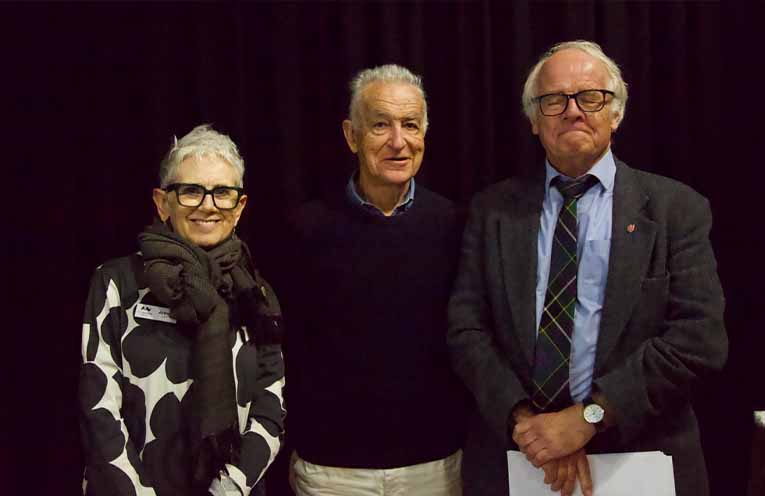
ARTSNATIONAL Coffs Coast’s recent talk on Ernest Shackleton’s Endurance expedition to Antarctica 1914 -1916 provided an interesting local side-story, noting that the daughters of the expedition’s official photographer, Frank Hurley, were famous in Coffs Harbour.
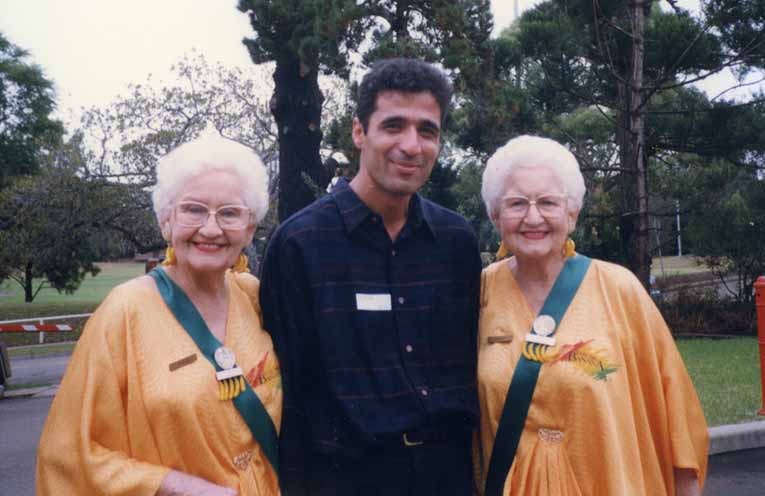
While there is no evidence that Mr Hurley ever came to Coffs Harbour, his twin daughters, Adelie and Toni, moved to the city in 1983 and made a name for themselves as the Banana Twins, fronting a clever tourism marketing campaign called the Banana Republic.
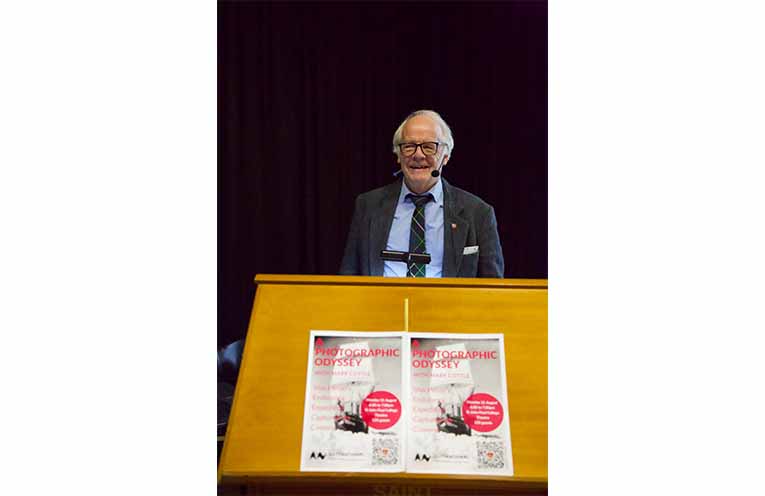
Guest speaker at the talk, UK-based historian, Mark Cottle, told the audience that, like their father, they were talented photographers, artists and makers.
“Adelie was a well-regarded press photographer, often called ‘front page Hurley’ by her peers,” Mr Cottle said.
“Did she learn photography from her famous father? ‘Good heavens, no,’ she told the Coffs Harbour Advocate, ‘we seldom saw our dad.
‘He was always away at the Antarctic or photographing wars.’”
Toni was equally talented.
A journalist by training, she made seven trips to the Antarctic, retracing her father’s footsteps and subsequently writing a number of books.
Coffs’ tourism director at the time, Paul McKeon, remembers the Hurley twins well.
“They were a dynamic pair,” he said, “and they took their role as joint ‘Presidents’ of the Banana Republic seriously.
“They never stopped promoting Coffs Harbour as a destination and made an outstanding contribution to our community.”
Presenting the ArtsNational talk on a temperate night at John Paul College Theatre, Mr Cottle’s vivid description of Shackleton’s expedition was said to bring shivers to the 160 people in attendance.
The Antarctic was the coldest place on earth, it had never been traversed, the race was on, he said in whetting their appetite.
Ernest Shackleton learned a lot from his previous Antarctic Nimrod Expedition (1907-9).
The Imperial Trans-Antarctic Expedition, as it was officially called, offered 26 places (plus Shackleton); it attracted 5000 applicants who were sorted into three categories: mad, hopeless and possible.
Those in the ‘possible’ category were prioritised.
Shackleton wanted crew members who were optimistic, courageous, patient, fit, and team players.
But they also had to ‘hold a tune’, Cottle said.
Shackleton knew that music making and games were essential in keeping the team together.
“Some veterans of previous expeditions joined up: Frank Wild; Frank Worsley; Tom Crean; and official photographer, Australian Frank Hurley, who was known to do anything to get a good shot.”
There was one cat and 69 dogs, plus a stowaway, Perce Blackborow.
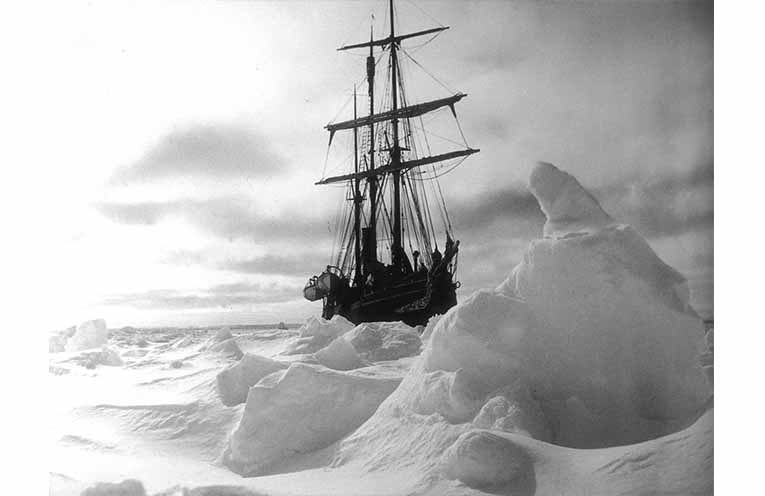
“Early in the expedition, the beautifully crafted vessel Endurance was marooned in pack ice, the pressure gradually crushing and submerging it.
“After eight months living on the ice flow, the ship’s company rowed to remote Elephant Island.”
They needed to lighten their load.
“The cat and dogs were shot, and Hurley had to relinquish over 300 photographic slides due to weight constraints, leaving only 150, which he guarded with his life, forfeiting food in order to retain.”
Shackleton then sailed with five companions over 1300 kms to South Georgia in a whale boat, returning over three months later to rescue his stranded crew.
The hazardous journey is still considered the greatest small-boat journey ever undertaken.
“How Shackleton and his crew endured such hardships is beyond comprehension,” Cottle said.
After leaving Elephant Island they endured 17 days of wild weather before they finally reached South Georgia, landing on the wrong side of the island.
“Shackleton, Worsley and Crean then trekked over precipitous mountains and glaciers by foot to reach the Norwegian Stromness whaling station for help.
“So bedraggled and wild were these three men that personnel at the whaling station ran in fright upon seeing them.”
Eventually, after many failed attempts, a Chilean vessel rescued the remaining crew at Elephant Island three months’ later.
“No lives were lost and the crew returned to London and immediately signed up to the 1914-1918 war effort.”
ArtsNational Coffs Coast’s September 28 arts talk is: Art of the Japanese Garden: From Tradition to Modernity.
By Andrea FERRARI
You can help your local paper.
Make a small once-off, or (if you can) a regular donation.
We are an independent family owned business and our newspapers are free to collect and our news stories are free online.
Help support us into the future.
Share via: