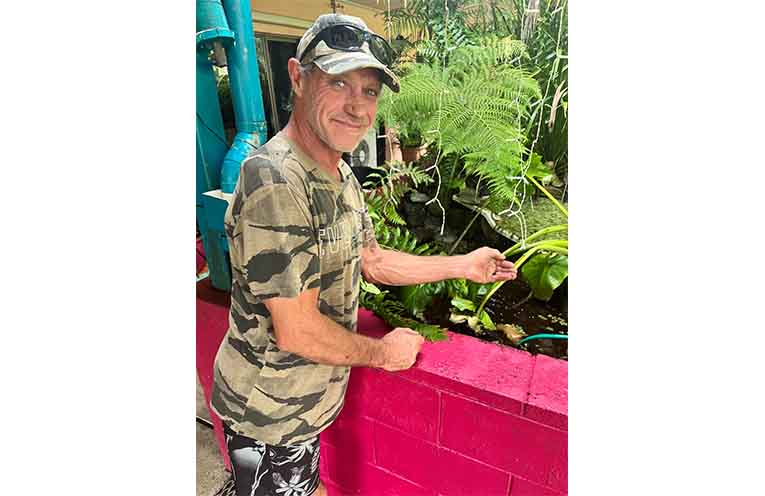
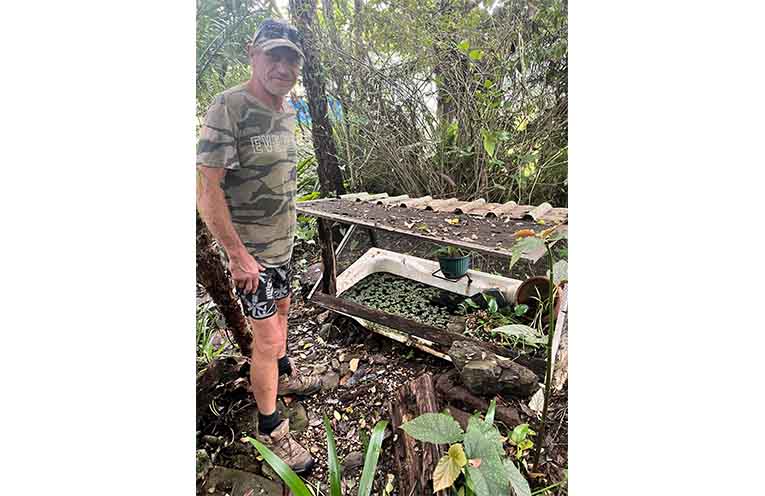
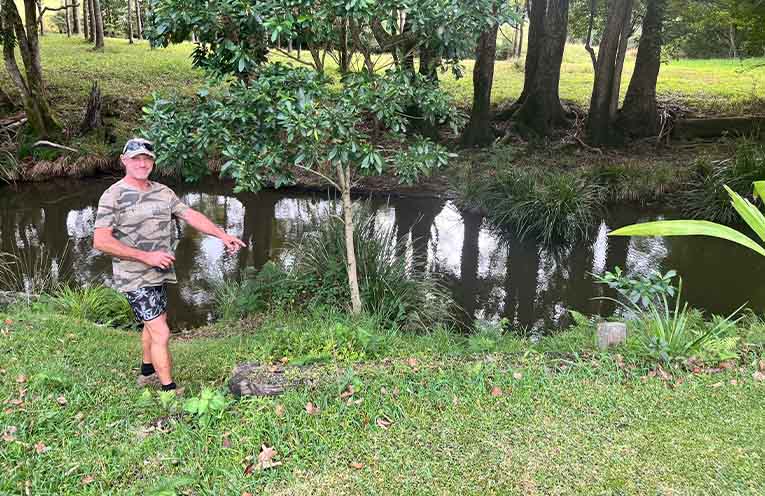
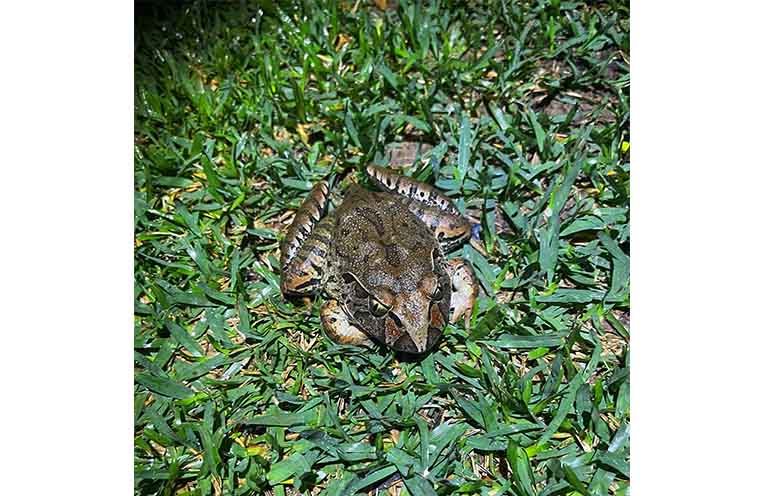
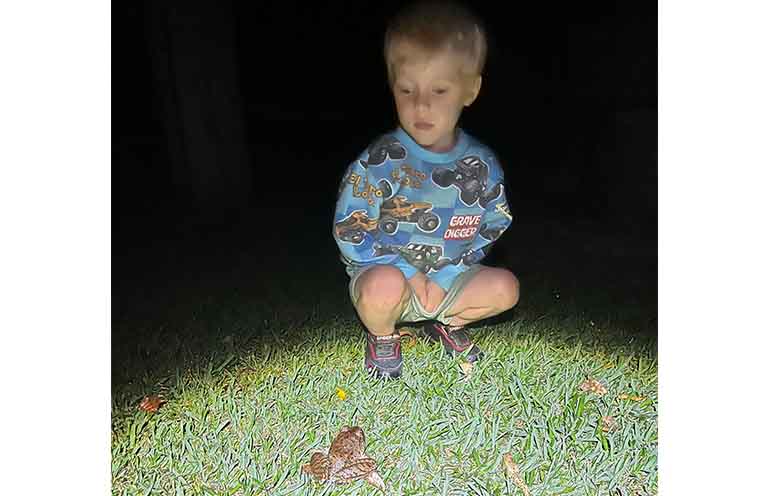
A KARANGI landholder has identified a population of the endangered Giant Barred Frog on his Upper Orara Road property, directly beside land earmarked for the proposed large-scale battery energy storage facility.
Dave Gentle, who has lived on his Karangi property for 57 years, said he first sighted the species around 30 years ago and has continued to observe them in wet, vegetated areas across the land.

“I’ve built the place for frogs,” Mr Gentle said.
“They’ve been here a long time. We also have a pet platypus who lives in the river.”
The Giant Barred Frog is Australia’s second-largest frog, growing up to 12cm in length.
It is found along the eastern seaboard from south-east Queensland to NSW and is listed as endangered due to significant population decline linked to chytrid fungus, habitat loss and fragmentation, climate-driven drying of breeding creeks, and invasive pests such as feral pigs and lantana.
Sharon Gentle said her husband’s connection to frogs developed through family life and later environmental awareness.
“Dave’s love of frogs began when our three children were young,” she said.
“After the fires in November 2019, he became even more aware of their importance.”
Sharon said he now regularly observes and supports frog habitat on the property, often involving their grandchildren.
“He regularly goes out at night to look for them,” she said.
“He continually monitors them and is increasing their habitat on our property.”
Mr Gentle’s property borders the proposed Karangi battery project, a 10-hectare lithium-ion facility being developed by Sydney-based company Avenis Energy.
The project is expected to include up to 280 battery units and provide 240MW of storage capacity, enough to power about 375,000 homes for up to four hours.
The site is located about 200 metres from the Orara River and is planned to connect into nearby Transgrid infrastructure.
Environmental scientist and frog specialist Peter Johnson, founder of The Frogarium near Coffs Harbour, said the presence of the species highlighted the ecological sensitivity of the area.
“The Giant Barred Frog is one of our most sensitive stream species,” Mr Johnson said.
“When they are still present, it generally indicates a relatively intact and functioning ecosystem.”
The species is particularly vulnerable to disturbance because of its reliance on clean, permanent waterways and undisturbed forest floor habitat.
Mr Johnson, who has bred Giant Barred Frogs in captivity, has worked with threatened frog species since the 1980s and has been involved in conservation and reintroduction programs along the NSW coast.
In NSW, development decisions have previously been constrained or altered due to threatened species protections, including the endangered Regent Honeyeater, with habitat requirements in areas such as the Hunter Valley and Capertee Valley influencing approvals and requiring project redesign or relocation.
In Queensland, the proposed Traveston Crossing Dam was ultimately refused federal approval in 2009 after assessments identified unacceptable impacts on threatened species, including the Mary River Cod and Mary River Turtle.
The decision under the EPBC Act effectively stopped the project on environmental grounds.
The Karangi battery proposal remains subject to assessment as a state significant development and will require a full Environmental Impact Statement before a determination is made by the NSW Department of Planning, Housing and Infrastructure.
Community consultation sessions earlier this year raised concerns about fire risk, biodiversity impacts and proximity to the Orara River.
With an endangered frog population now identified immediately adjacent to the proposed site, ecological constraints are expected to be a central consideration in the assessment process.
By Kate PYE