Share via:
DISCOVERING the previously unknown longevity of sea cucumbers has amazed the scientists studying this ‘earthworm of the sea’.
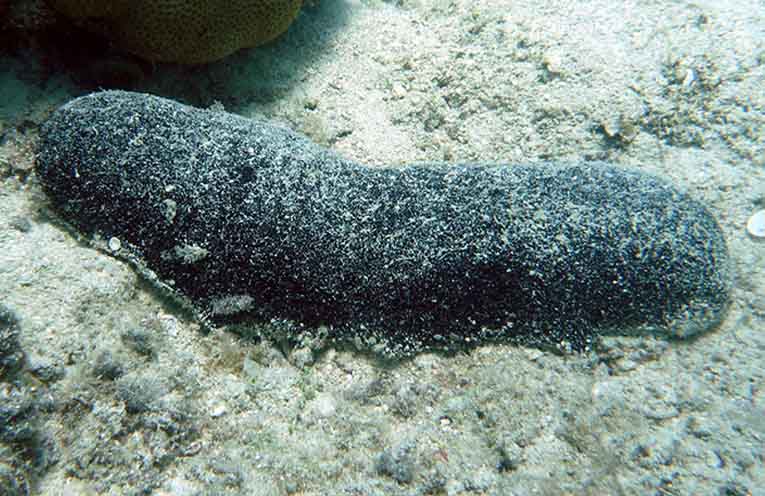
According to the team of marine scientists, including Professor Steven Purcell from Southern Cross University’s National Marine Science Centre, in conducting this first-of-its-kind genetic study they learned that endangered black teatfish sea cucumber can live for decades, with a small portion of the animals estimated to live more than 100 years.
The researchers made the discovery by comparing DNA samples from a population collected in a no-take zone of the Great Barrier Reef Marine Park off Lizard Island in 2000 with samples collected from the same location 24 years later.
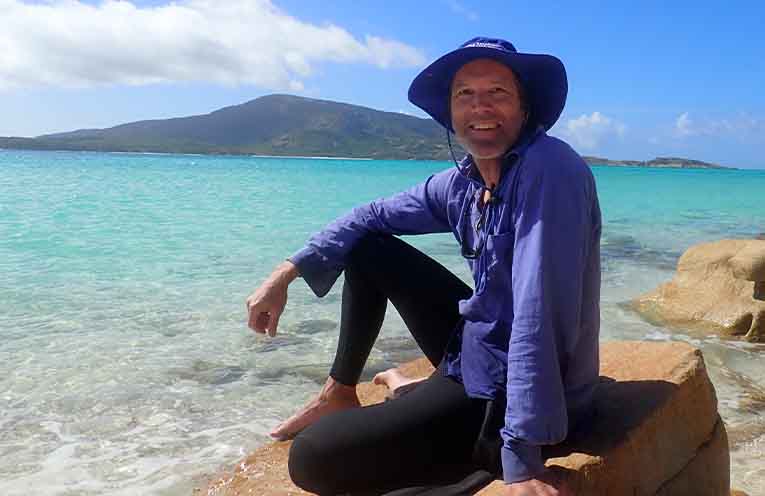
Professor Purcell, who has specialised in sea cucumber research for 25 years, said he was gobsmacked when the findings showed that some of the black teatfish studied were 100 years old.
“When I first started researching these animals 25 years ago, I didn’t imagine we could come so far in understanding their biology,” he told News Of The Area.
This study is a gamechanger because it shows that some sea cucumber species, including the black teatfish, might only sustain very low rates of harvesting, meaning there are implications for commercial fishery catch limits,
Professor Purcell said.
The research shows that some marine life populations might be quite stable and can provide their services to ecosystem health (such as mixing reef sands and recycling organic matter), if they are not over-exploited.
Much like earthworms that break down leaf litter and return nutrients to the soil, sea cucumbers play an important role in tropical marine ecosystems, recycling nutrients on the ocean floor and mixing the sand on which they feed.
Recent studies also show healthy sea cucumber populations can enhance coral health.
The danger is that, as with abalone and shark fin, sea cucumbers are a highly valued edible delicacy in some cultures and are fished in Australia, the Pacific Islands and Southeast Asia.
The black teatfish studied in this research is one of the most sought-after sea cucumbers in Australia, the Pacific Islands and Southeast Asia, where it has been decimated.
It is targeted by foreign poachers on offshore Australian reefs, such in marine parks at Rowley Shoals (WA) and the Coral Sea (off northern QLD).
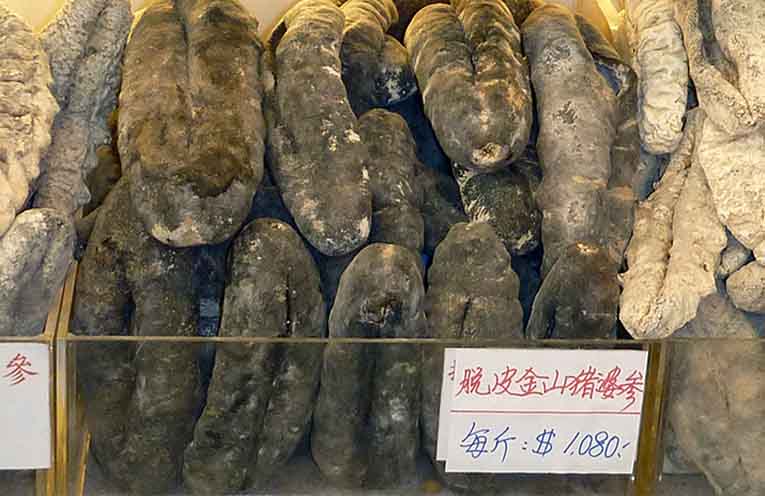
Sold for more than AU$400 per kg in Hong Kong, the black teatfish are now seldom seen in Asian markets as wild stocks have been overfished in most other countries.
They can be found throughout the Great Barrier Reef, and their distribution extends across to Western Australia.
“Sea cucumber fishing is a multi-million-dollar industry in northern parts of Australia,” Professor Purcell said.
“Most of them are cooked and dried and then exported to China.
“I’m a fisheries scientist and I fish recreationally, so I want there to be sustainable fisheries, but we have to manage both recreational and commercial fisheries conservatively, so our grandchildren are assured to have healthy resources too.”
The team’s discoveries in Australia have helped to shape international conservation actions, such as trade agreements for endangered wildlife.
The species is on Appendix 2 of the Convention on International Trade in Endangered Species (CITES) and presently classified as Endangered by the International Union for Conservation of Nature (IUCN) Red List of Threatened Species.
CITES Appendix II compels countries to undertake a sustainability assessment of wild stocks and fishing impacts before they can export the species.
“These new research findings should have major implications to how fisheries for these sea cucumbers are managed in the broader Indo-Pacific region,” Professor Purcell said.
“While the wild stocks are in better shape in Australia, the fishery management models for our stocks have not been conservative enough.
“Our research puts into question the long-term sustainability of the current harvest rates.”
Professor Purcell told NOTA the public could help protect the sea cucumbers by supporting campaigns.
“Your voice matters,” he said.
“Keep an eye out for the ‘Have Your Say’ public consultations about state (QDPI) and nationally managed (DCCEEW) fisheries and submit your comments on their sustainability.”
By Andrea FERRARI
You can help your local paper.
Make a small once-off, or (if you can) a regular donation.
We are an independent family owned business and our newspapers are free to collect and our news stories are free online.
Help support us into the future.
Share via: