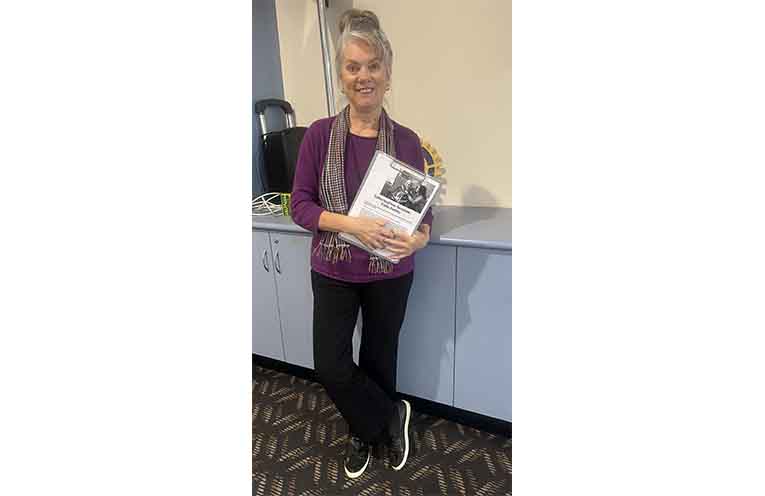
WHEN Falls Prevention educator Judy Jackson fell headfirst down the stairs at home, she landed with relief that she had not broken anything in her body.
“I teach falls prevention and consider myself fit, active and very aware of the risks, yet I still suffered a serious fall,” she told News Of The Area.

“One moment I was heading down the stairs and the next I was falling headfirst.
“Instinctively I grabbed the handrail.”
A move which may well have saved my life, she said.
She struck her right shoulder against the stairwell, landing heavily on her right knee and then hit her right arm on the edge of the sixth stair.
“It was over in seconds, but the lesson has stayed with me.”
The experience reminded her that falls are not just something that happens to other people.
“Falls can happen to anyone,” Ms Jackson said.
“No matter how fit, active or informed we are, a moment’s inattention can have serious consequences.
“My experience reinforced the importance of slowing down, staying alert and never becoming complacent.”
Ageing well after 55 is about much more than avoiding falls.
It’s about maintaining muscle strength, improving balance, eating well, and staying socially connected.
These are principles Judy Jackson lives by every day as a foundation member of Woolgoolga Silver Salties.
Ms Jackson helped the late Colin Morley establish the Silver Salties Program.
Colin’s vision and determination helped make Woolgoolga one of the first Surf Life Saving Clubs in Australia to embrace the initiative.
Following Colin’s death in 2025, his wife, Jo Torrens, and a dedicated group of volunteers chose to continue the program in his honour.
Today, Silver Salties remains a thriving community group, helping older adults stay active, connected and independent.
Ms Jackson continues to assist with administration and leads a Chair Aerobics class, encouraging participants to improve their strength, balance and confidence.
She believes that regular movement, friendship and community involvement are key ingredients for healthy ageing.
Falls are not an inevitable part of ageing, but they are a risk that can affect anyone.
There are practical steps that can reduce that risk, including regular strength and balance exercises, maintaining good nutrition, reviewing medications, checking our vision, and staying socially connected and engaged within the community.
“The Woolgoolga Seniors Centre in partnership with Southern Cross University recently completed an excellent program on Fall Prevention and Wellbeing for a group of 20 of their members,” President of Rotary and Woolgoolga Seniors Centre, Rod Mackenzie told NOTA.
“The program ran for five weeks, half-a-day each week, and the feedback from everyone was that it was a top-class program.
“The Woolgoolga Seniors Centre plans to run it again in the first half of 2027.”
The local Rotary District 9660, which includes all Coffs Coast clubs, also runs a fall prevention program.
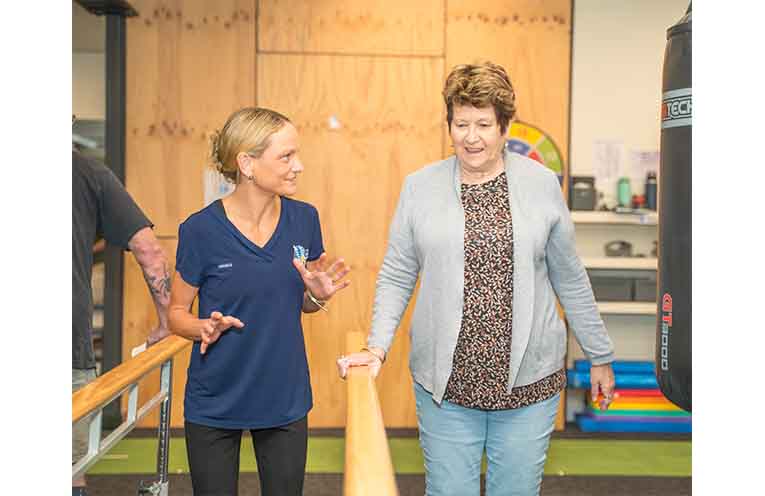
Coffs Neuro Physio Director and Neurological/Vestibular Physiotherapist Amanda O’Neill told NOTA that falls are the leading cause of injury-related hospitalisation and the second leading cause of injury-related deaths worldwide, yet only 6 per cent of older Australians participate in balance training for falls prevention.
“We as health professionals have not been doing well enough in this space,” she said.
“There are some risk factors we can’t change, such as age, frailty, medical conditions.
“But there are plenty we can, including increasing physical activity, increasing capacity for activities or daily living, and reducing fear of falling.”
A key part of making a difference to someone’s falls risk is to stop underestimating people’s abilities and start challenging them more.
Ms O’Neill urges professionals to be looking at the research as to exactly how and why people fall and be more specific in what they include in their programs.
“Research shows that falls commonly occur while walking and changing directions, so training dynamic balance, gait adaptability and vestibular function is non-negotiable, particularly as these become less automatic with age,” she said.
“Additionally, around 60 per cent of falls occur at home, making environmental safety and everyday habits an important component.
“Regular strength, balance, and conditioning exercise should be viewed as essential maintenance, not something to address only when problems arise.
“Lastly, preventing falls is one thing, but minimising injury from falls is equally important.”
Ms O’Neill advocates for training people how to fall well, which can reduce their impact, fear, and the risk of mortality.
Coffs Neuro Physio runs an eight-week falls prevention program called ‘Balance Ahead’.
By Andrea FERRARI