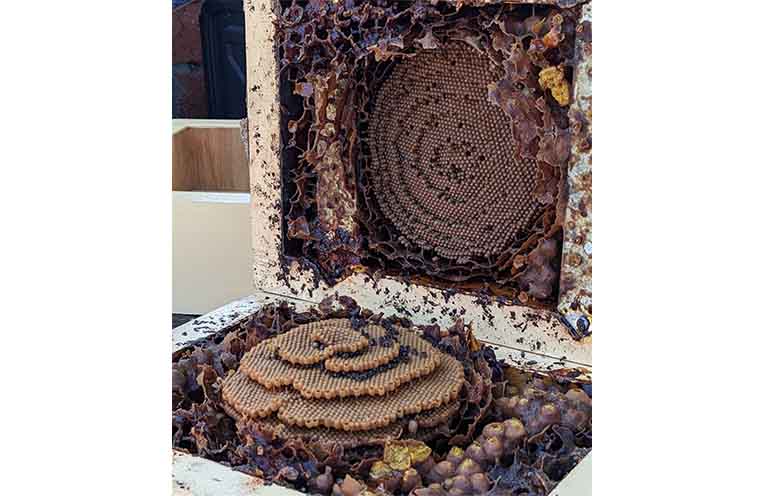
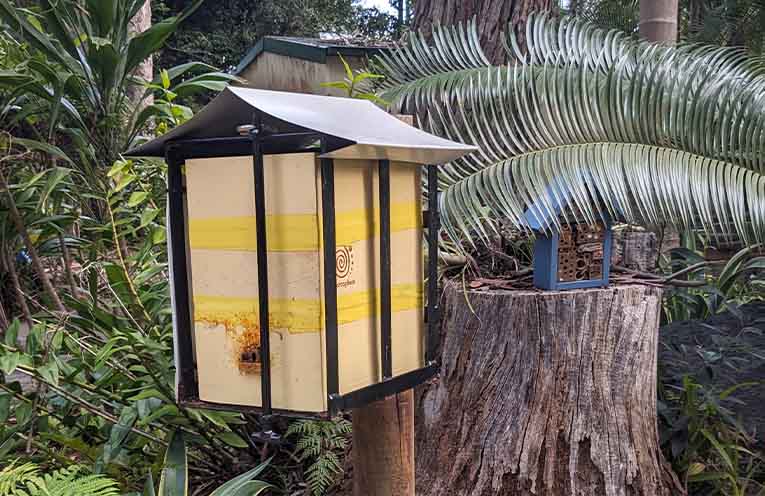
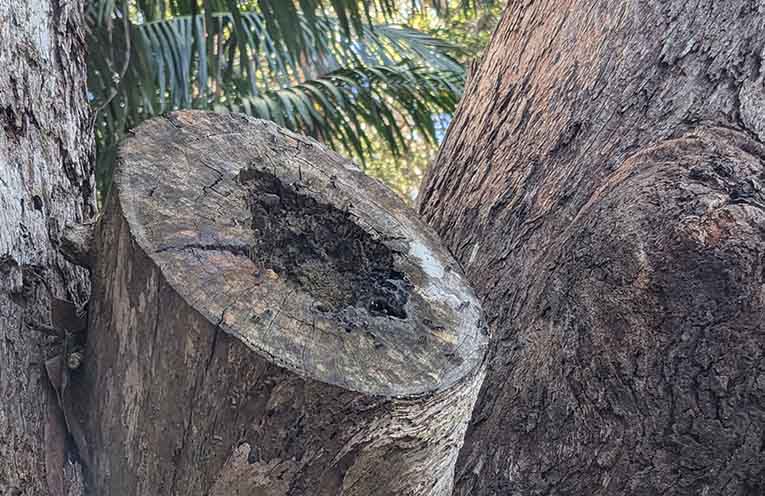
ANOTHER native beehive has been stolen from the Coffs Harbour Botanic Garden, making it the second wild colony stolen since early 2024.
The latest theft is far from an isolated incident.

Native stingless bees, Tetragonula carbonaria, have become a growing target for thieves along the Mid North Coast, tracing back to October 2023, when seven box hives were stolen from Clarence Native Bees Inc.
Those hives were rescued during land clearing for the Coffs Harbour bypass and destined for local schools.
Further thefts followed in 2024: a hive from Woolgoolga Community Gardens and three hives worth $2,400 taken from Coffs Beekeeping Supplies.
A new hive can cost between $600 and $800.
Judith Webster, owner of Coffs Beekeeping Supplies, noted the thieves appeared to have little understanding of native bees.
She feared that the rough removal had likely caused significant damage or destruction to the colonies.
Despite neighbouring CCTV and other information being provided to police the investigation stalled.
She has since ceased keeping native beehives on site.
Native stingless bees are popular among community gardens and childcare centres and are unaffected by the Varroa mite.
They are also capable of buzz pollination, which European honeybees cannot perform, making them effective for crops like blueberries and tomatoes.
When a beehive is stolen, the bees suffer most.
Hives should ideally be moved after dark, once foraging bees return, and transported at least two kilometres away.
If taken during the day, the worker bees left behind will die.
“You see it if you move a hive even just for five minutes on an active day – there’s all these bees just hovering around where the hive used to be,” said Elaine Bean from the Australian Native Bee Association.
Dr Tobias Smith, a native bee researcher, said the problem extends up and down the east coast.
He was particularly troubled by the Botanic Gardens theft.
“This is a theft of a natural colony that belonged to the community.
“And it was part of the ecosystem,” he said.
Ms Bean said thefts increasingly affect the community’s ability to promote native bees.
“It’s hindering our club – people are constrained and wary.
“They don’t want to become a target,” she said, advising beekeepers not to draw attention to hives around unfamiliar visitors.
Increasingly, beekeepers are resorting to metal cages and CCTV to protect hives and even trialling GPS trackers.
They are at a loss to explain where the hives are being taken, adding they hadn’t seen evidence of hives being sold back into the recreational market.
Police are aware of the issue but so far none of the thefts appear to have been resolved.
Under-reporting may be contributing to the problem.
If caught, thieves face charges including larceny, trespass, and damaging property.
Anyone with information can contact Crime Stoppers on 1800 333 000.
By Jessica MILLER