Share via:
SYDNEY-BASED developer Avenis Energy is proposing a 10-hectare lithium-ion battery storage facility in Karangi, with construction and operation planned from 2028.
The battery system is expected to deliver 240 MW of storage capacity, enough to power around 375,000 homes for up to four hours, supporting state and federal net-zero emissions targets by 2050.
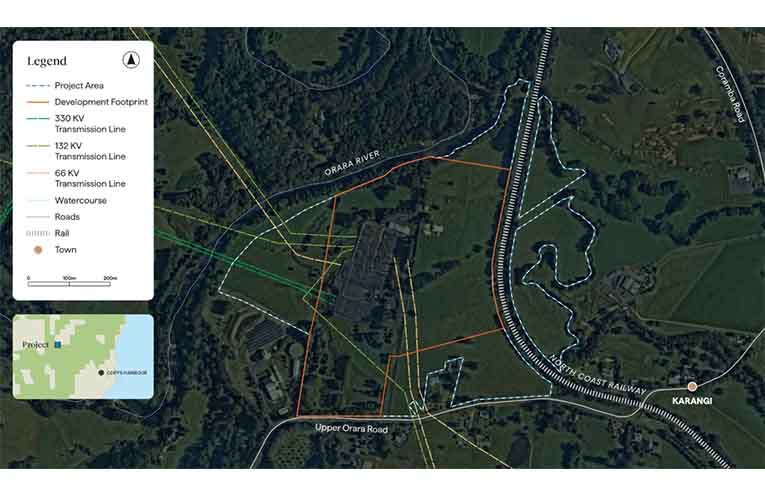
The proposed development on Casuarina Lane is located 200 metres from the Orara River and will include up to 280 batteries, each the size of five metre squared shipping containers.
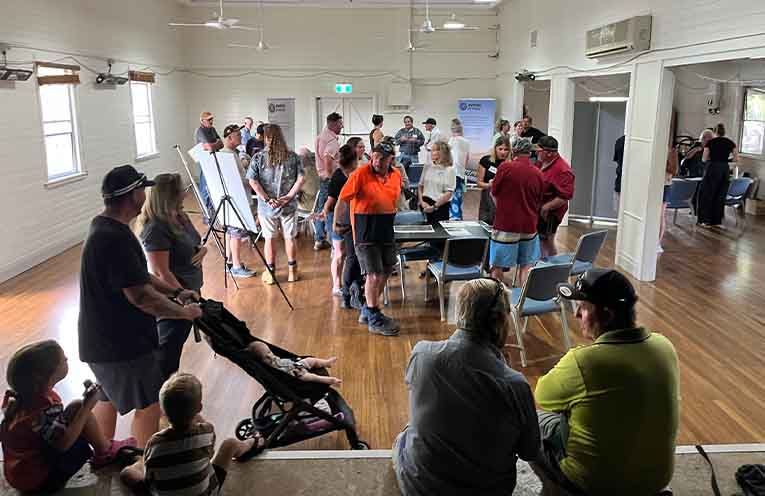
As part of the approval process, community information sessions were held on Tuesday 24 March in Coffs Harbour and Karangi, where residents raised concerns about project safety, visual impacts, biodiversity, water resources, and transparency.
However, no verbal feedback was recorded.
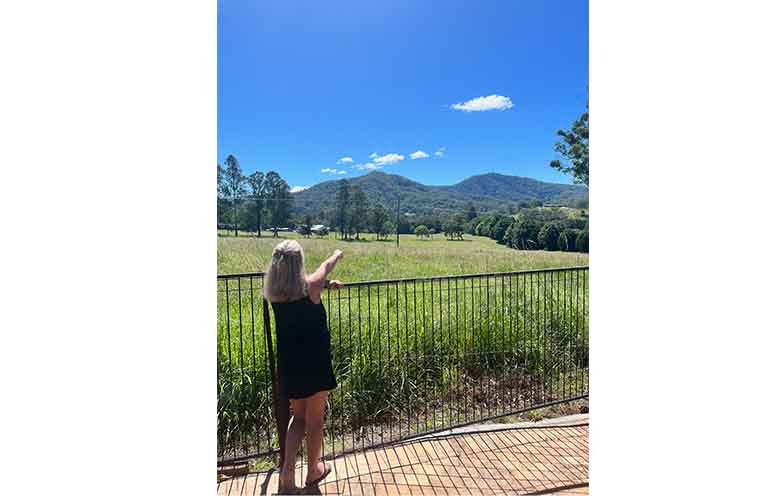
Blaize Jenkinson, whose property will overlook the proposed development, said he first heard about the project two months ago.
“Nobody I spoke with at the session could guarantee these batteries won’t leak or catch on fire,” he said.
Linda Bunt, whose child goes to Karangi Public School, also raised concerns about the site’s proximity to the Orara River.
“This facility will sit 200 metres from the river, where families swim, fish and kayak,” she said.
Neighbouring landowner Sharon Few expressed concern for local farmers.
“Bore water depends on the Orara River as it’s used daily by livestock, crops, and residents,” she said.
The site has been selected due to its proximity to the water treatment facility and Transgrid substation, into which it will connect.
Since entering the market in 2023, Avenis Energy has been actively acquiring land on the East Coast, with six other battery storage projects in development in Warrenheip, Sunshine Estate, Winton, Moree, Grahamvale, and Deniliquin.
The developments are all considered state significant and require scoping reports to guide full environmental impact statements, with approval then being determined by the NSW Department of Planning, Housing and Infrastructure.
Site property owner Tim Cheers said he had been approached by multiple developers over the past five years and ultimately agreed to work with Avenis, noting that “everything eventually has its price point.”
Although the battery manufacturer has not yet been determined, lithium-ion batteries are widely used in grid-scale energy storage due to their 10–15-year lifespan, but they require careful handling as their temperature must be controlled, they can overheat or catch fire, and are considered toxic waste, posing significant disposal hazards.
In the event of a fire, toxic chemicals like hydrogen fluoride and carbon monoxide are released, often triggered by thermal runaway, where a single failing cell sparks a chain reaction.
This was the case with the 2021 Victoria Big Battery fire, which burned for several days.
Coffs Harbour Mayor Nikki Williams said while Council does not have an approval role, its “priority is making sure the process is transparent, communication is clear, and people have access to the facts they need to make informed submissions,” adding that the level of early engagement had been “disappointing.”
Once approved, Avenis estimates the $200 million project will take 18 months to build, create up to 180 temporary construction jobs and three full-time roles over its 35-year lifespan.
Residents can submit feedback through a survey on Avenis’ website for the Karangi project.
By Kate PYE
You can help your local paper.
Make a small once-off, or (if you can) a regular donation.
We are an independent family owned business and our newspapers are free to collect and our news stories are free online.
Help support us into the future.
Share via: