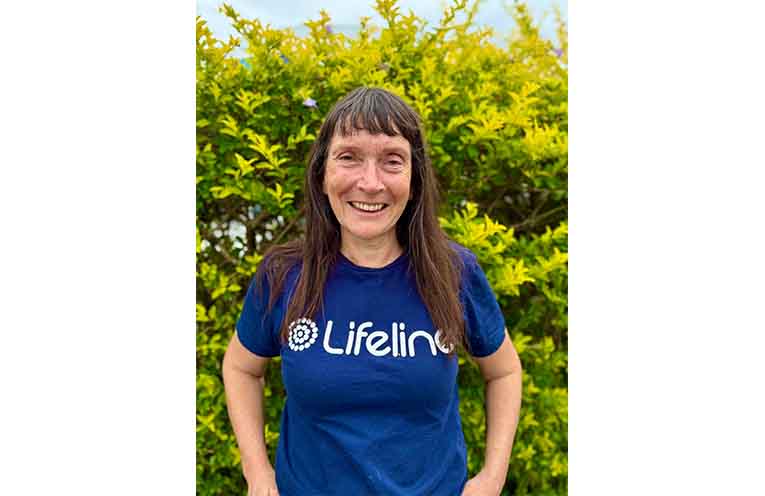
LIFELINE North Coast Crisis Support Manager and Trainer, Sunjii Doohan, shares her lived experience in a way that beautifully illustrates the importance of asking for help.
Her story also provides valuable insight into Lifeline’s Crisis Support volunteer training.
“Have you ever faced a crisis and felt you had no one to turn to?,” Sunjii poses.
“Have you walked alone through dark and difficult times?
“Or been the person someone else reached out to in their moment of despair?
“Every day, thousands of Australians find themselves in crisis, searching for someone who will listen, understand, and offer support.
“I know this because I was once one of them.”
For many years, Sunjii lived with mental health challenges and substance dependence.
Those struggles eventually pushed her into extreme crisis.
She became reliant on drugs, trapped in an abusive relationship, unemployed, and eventually homeless.
Living on the streets of Melbourne and sleeping in doorways or abandoned buildings her only constant companion was “a man quicker with his fists than with kindness”.
Overwhelmed by shame, Sunjii withdrew from the family and friends who might have helped her.
“I was frightened, isolated, and without support,” she said.
Today, her life is unrecognisable.
In recovery for ten years, over that time Sunjii has returned to university, completed a degree and then a Master’s in Social Work.
“I now have a safe and beautiful home, a meaningful career in the welfare sector, strong relationships with my family, and a community of supportive friends.
“By any measure, my story is one of success.
“But I did not rebuild my life alone.”
At her lowest point, Sunjii says she was fortunate to access the support she needed.
“A homelessness service found safe housing for me.
“A rehabilitation program helped me overcome my substance use issues.
“A compassionate psychologist provided the emotional support that allowed me to begin healing.
“A welfare organisation helped me leave the abusive relationship.
“And when I was ready, my family welcomed me back with love and understanding.”
This available support changed the course of her life, she says, and it is available for others through services like Lifeline.
Lifeline is a national 24/7 crisis support service offering hope, comfort, and connection to people across Australia in their darkest moments.
Here in Coffs Harbour, Lifeline North Coast is proud to contribute to this essential work.
“We are deeply committed to mental health and community wellbeing, and we believe that with the right training, anyone can learn to support people in crisis.
“Could you see yourself volunteering as a Crisis Supporter?
“You don’t need personal experience with trauma.
“You don’t need to know the ‘perfect’ thing to say.”
What matters most is compassion, respect, and self-awareness.
Lifeline North Coast’s comprehensive Crisis Support Workplace Training gives volunteers the skills they need to provide calm, effective support when it matters most.
Recently one volunteer shared: “I’ve always wanted to be the person someone could call when they needed help.
“Now I get to be that voice on the other end of the line.
“It’s time well spent.
“Lifeline has shaped me… it’s made me a better communicator, a better friend, and a better human.”
Many of the volunteers speak about the profound privilege of being trusted by callers who share their fears, pain, and hopes.
Some join Lifeline to strengthen their clinical skills: counselling, social work, and psychology students in particular find the experience invaluable.
Others join because helping people gives them a deep sense of purpose.
“If you are interested in becoming a Lifeline Telephone Crisis Supporter, I encourage you to get in touch,” Ms Doohan said.
Phone: 0411 212 686
Email: sdohhan@lifelinenc.org.au
The next Lifeline Telephone Crisis Supporter training program begins 19 March 2026, and enrolments are now open.
“Together, we can ensure no one has to face a crisis alone.”
By Andrea FERRARI